poster×club from short no. 027 buy us a coffee ↗
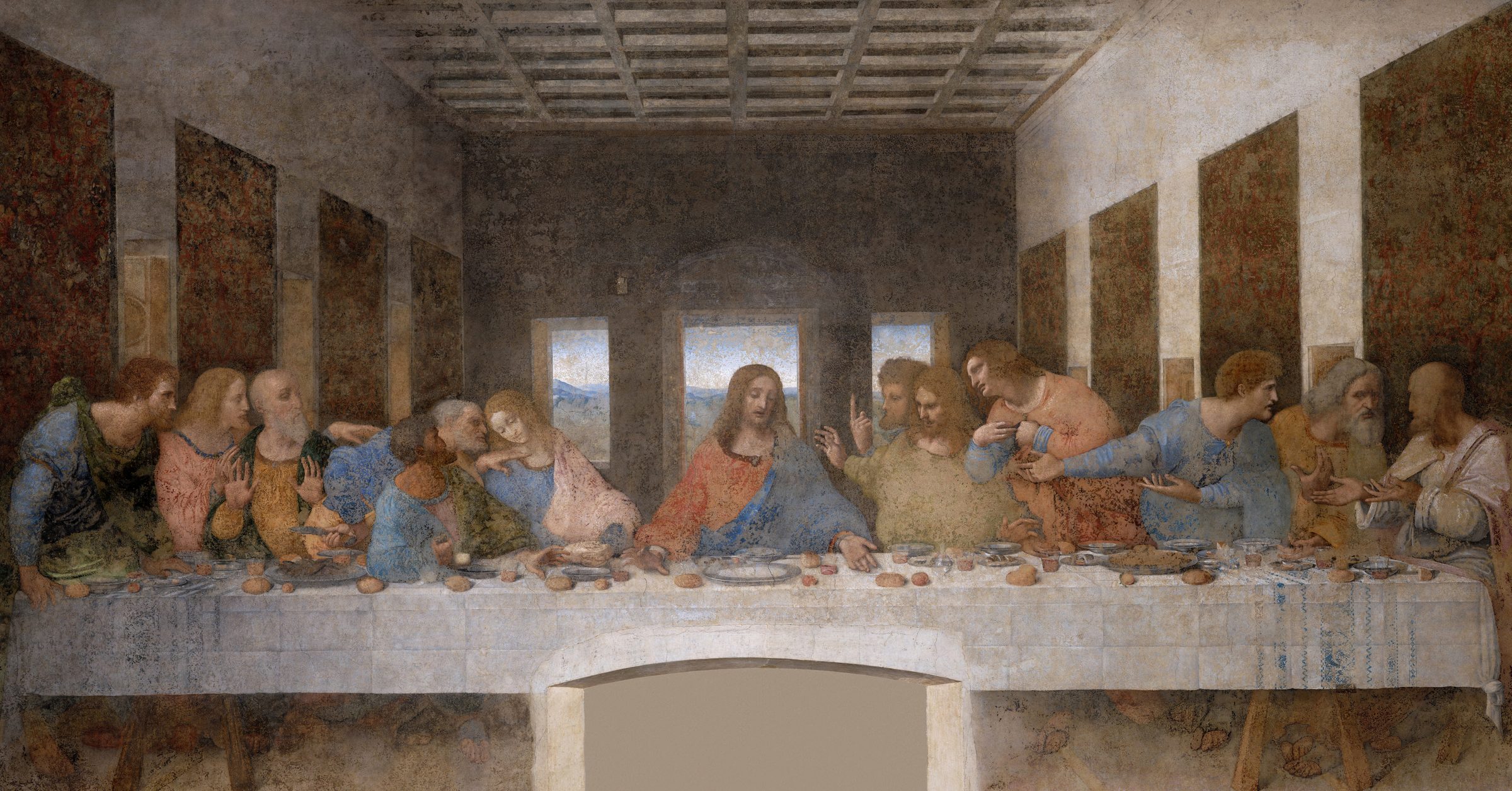
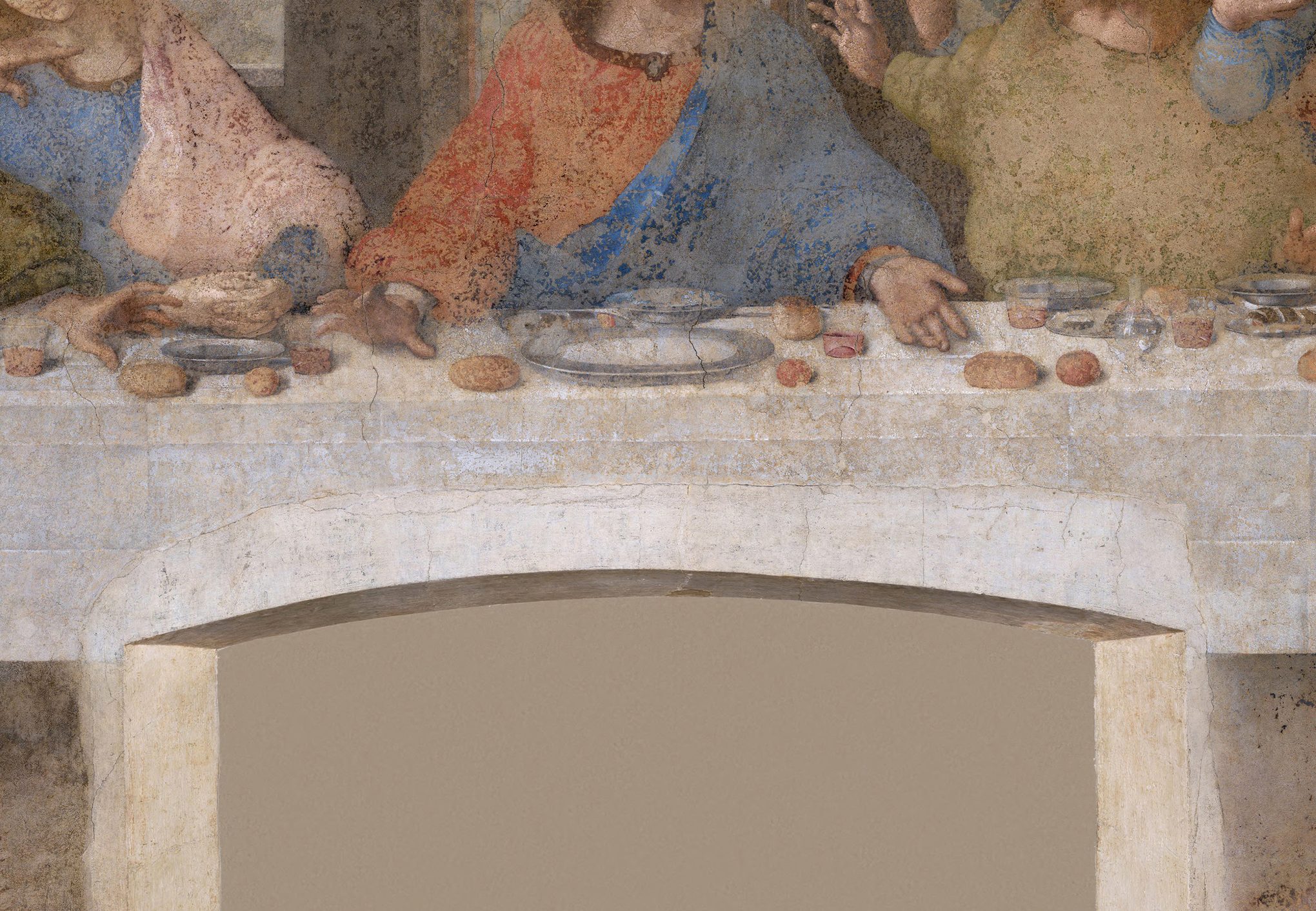
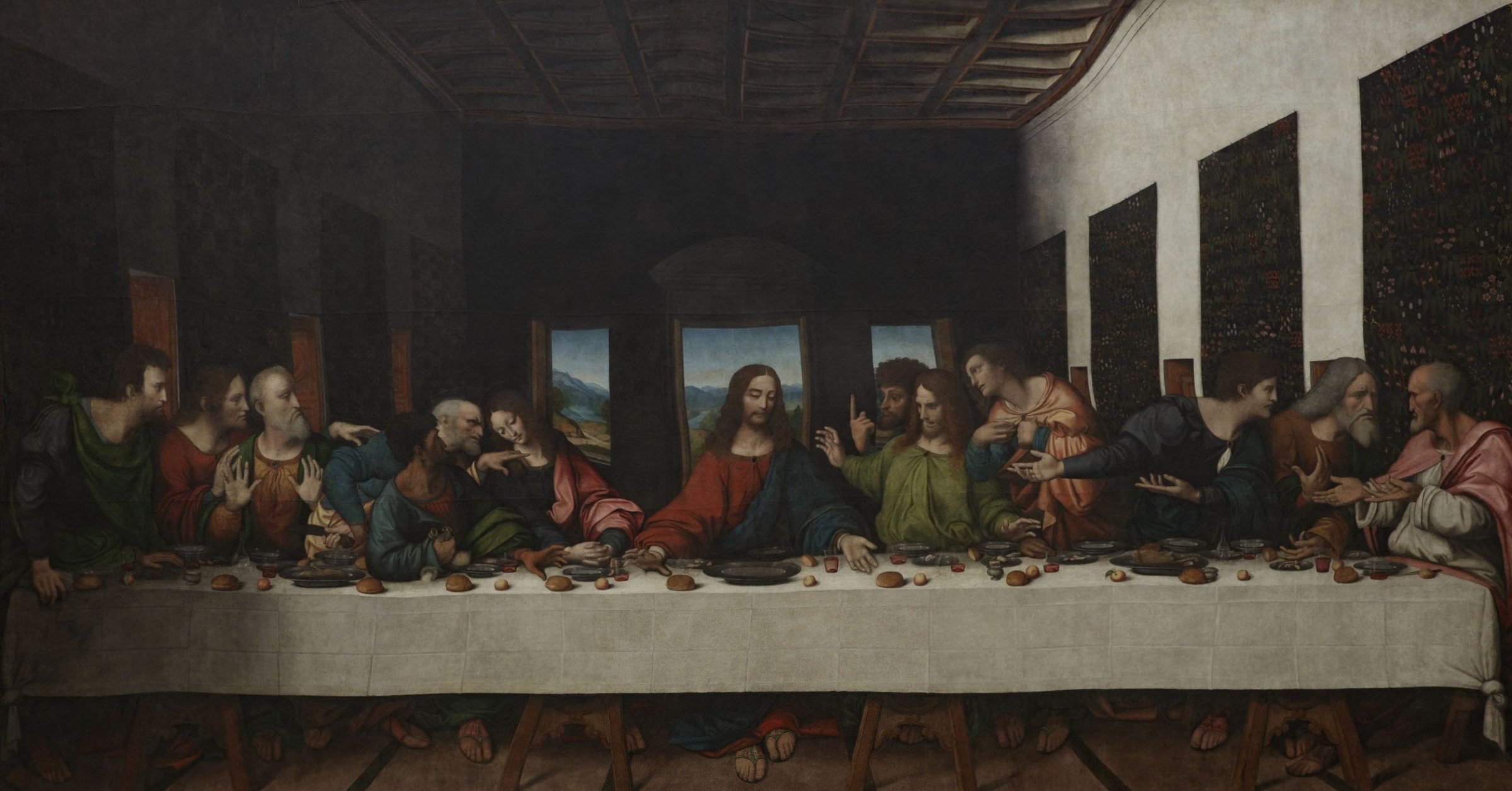
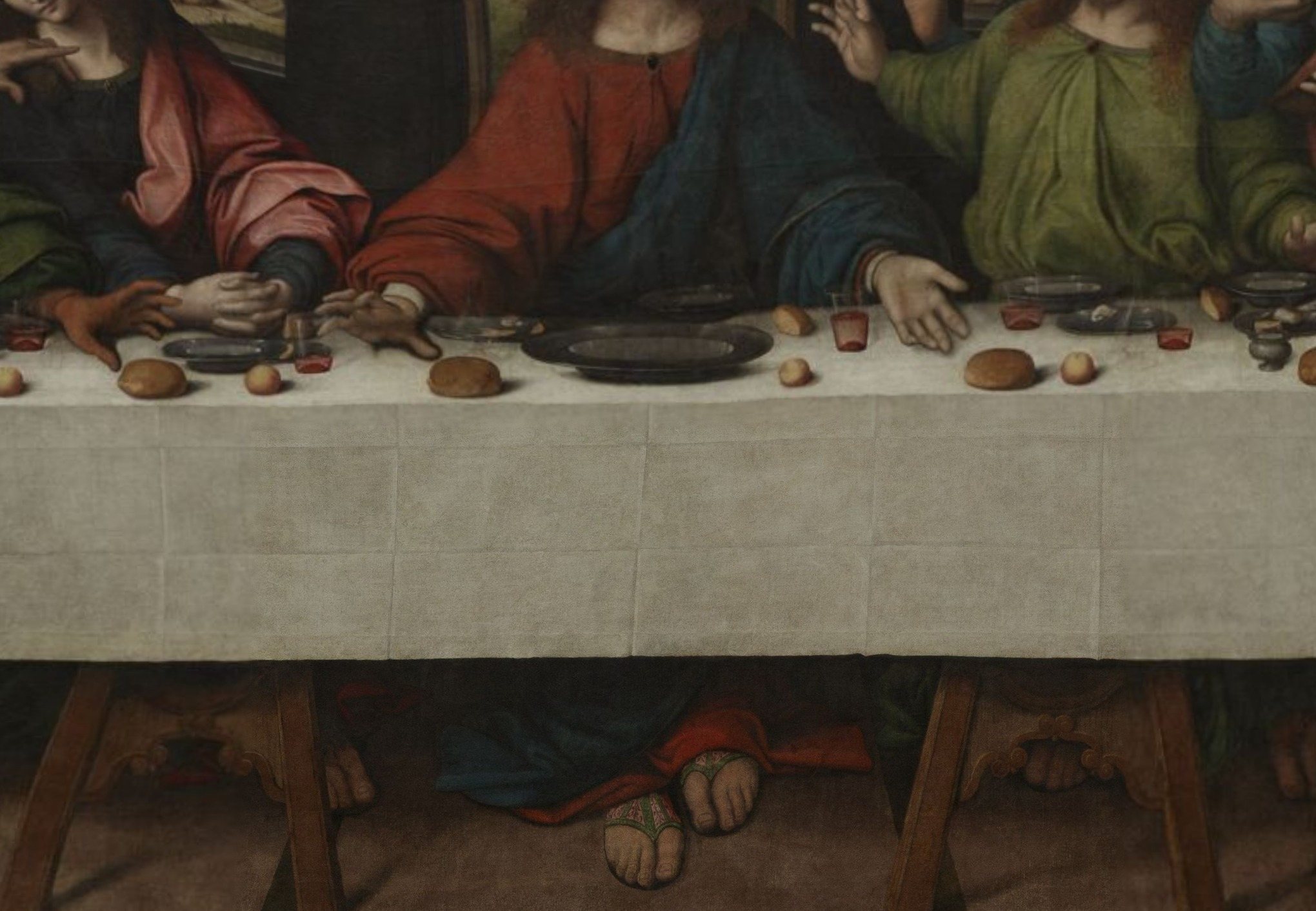
in 1652 the friars made the door under leonardo’s last supper bigger, right through christ’s feet. a copy painted around 1520 still has them.

see what
the door took.

01 · the wall, and a copy under the lens

go to

the wall is leonardo’s, as it is now. the lens shows a copy at tongerlo abbey in belgium, painted around 1520, lined up with the wall point by point. move it under the table.

02 · the door, from the room

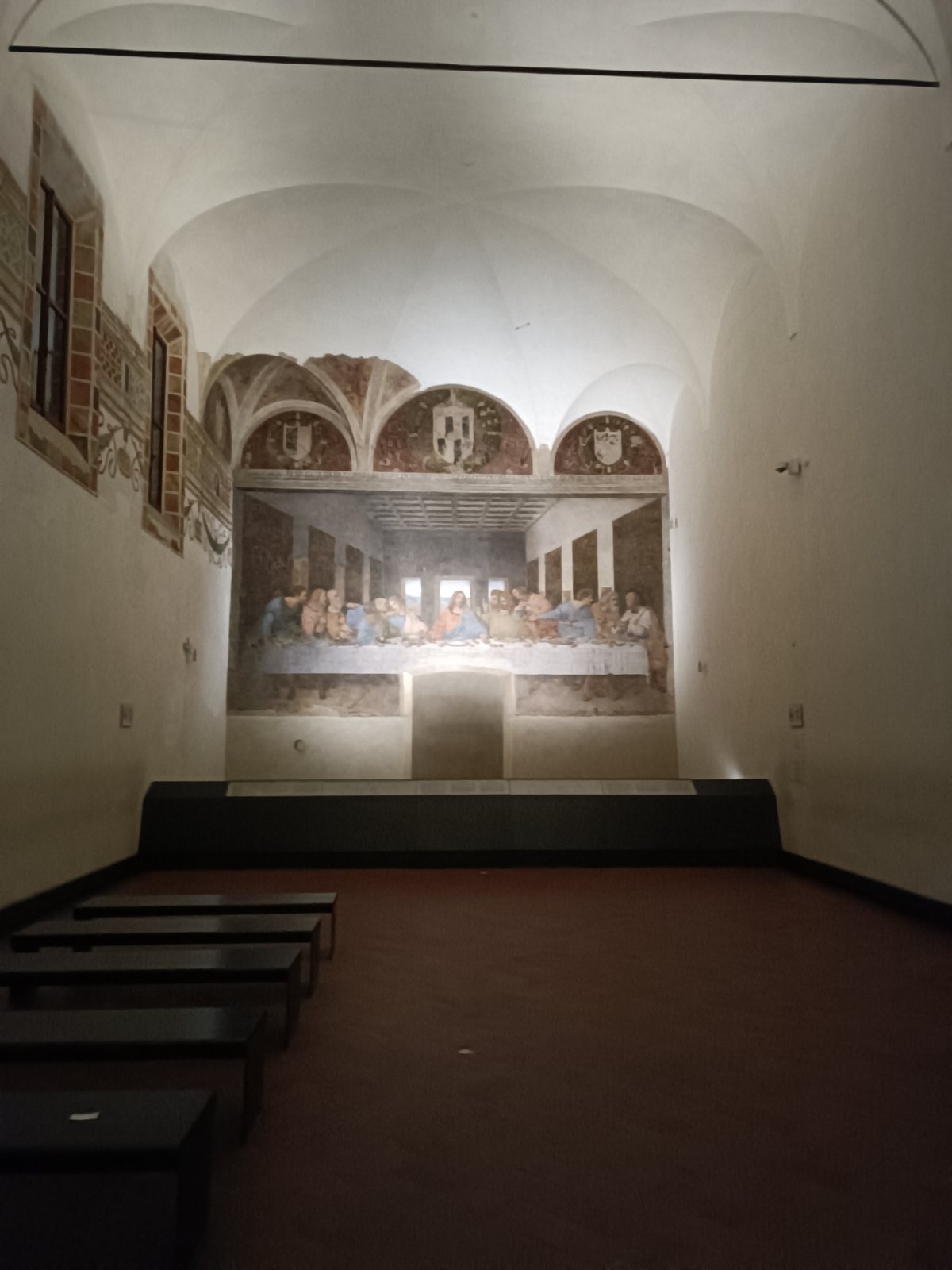
the friars’ dining hall at santa maria delle grazie in milan: a long vaulted room with the last supper on its end wall, and under the middle of the painting the outline of a doorway, walled up, from the floor up into the table

“…se la pittura non fosse stata in pessimo stato, e come perduta.”

domenico pino, a friar of the convent, in 1796: they would never have done it had the painting not been in the worst state, as good as lost. the door under it had been low since leonardo’s day. around 1652 the friars, wanting a grander way into their dining hall, made it taller and wider, through the feet of christ and of the apostles beside him; goethe called it far larger than necessary. it was walled up long after. its arch is still in the painting.

leonardo painted the last supper in the 1490s on the end wall of the room where the friars of santa maria delle grazie in milan ate. he didn’t paint it in fresco, into wet plaster, but on the dry wall, in a way of his own, and it began to flake while he was still alive: in december 1517 a visitor, antonio de beatis, found it most excellent, although it is beginning to spoil. in 1566 giorgio vasari could make out nothing but a blurred stain, and said so while praising a friar’s copy, which would always bear witness to leonardo’s art.

copies were made while it could still be seen. the one in the lens hangs in tongerlo abbey in belgium: kik-irpa, which photographed it, dates it around 1520 and gives it to the workshop of giampietrino, one of leonardo’s pupils. under its table, as in the other early copies, christ’s feet are there, side by side. two historians of the painting, pietro marani and leo steinberg, see the crucifixion foreshadowed in them, though they disagree on how the feet were set. (translations from the italian are ours.)

prints that go with it